Low hemoglobin symptoms in women: signs not to ignore

Short answer
Common signs of low hemoglobin in women are tiredness, weakness, breathlessness on stairs, a pounding heartbeat, headaches and paler skin. Some notice brittle nails, a sore tongue, more hair fall or a craving for ice. For women who are not pregnant, the WHO counts a level below 12 g/dL (grams per decilitre) as anaemia. A blood test confirms it, so see a doctor rather than guessing.
What are the early signs of low hemoglobin in women?
Hemoglobin (also spelt haemoglobin) is the protein in red blood cells that carries oxygen around the body. When it runs low, the condition is called anaemia (also spelt anemia). The signs often creep up slowly, and mild anaemia may cause none at all. Common early signs are:
- tiredness and low energy, or feeling weak with effort
- getting out of breath on stairs or a short walk
- a heartbeat you can feel pounding or fluttering
- headaches, dizziness, or feeling light-headed when you stand up
- paler skin than usual
- trouble concentrating
As the level falls further, some women notice brittle or spoon-shaped nails, a sore tongue, sores at the corners of the mouth, more hair on the comb, ringing in the ears, restless legs at night, or an urge to chew ice.
What is a normal hemoglobin level for a woman?
The World Health Organization (WHO) uses these cut-offs, in g/dL (grams per decilitre, the unit on most Indian lab reports), for women aged 15 to 65 who are not pregnant:
- 12 g/dL or above: no anaemia
- 11 to 11.9 g/dL: mild anaemia
- 8 to 10.9 g/dL: moderate anaemia
- below 8 g/dL: severe anaemia
So a reading of 9 falls in the moderate range and needs a doctor's attention and a search for the cause. In pregnancy the cut-offs are lower (11 g/dL in the first and third trimesters and 10.5 g/dL in the second), and your antenatal doctor will guide you.
Your report may show the lab's own reference range, so go through it with your doctor. Anaemia from low iron appears only after the body's iron stores have run low, so a doctor may also check ferritin, the iron your body keeps in store.
Why is iron deficiency so common in women?
Lack of iron is the most common cause of anaemia, and women meet it more often for a few reasons:
- Monthly blood loss. Heavy, long or frequent periods are one of the most common causes of low iron. If your bleeding is heavy, see a doctor about the bleeding itself, not just the iron.
- Pregnancy and childbirth. Pregnancy raises the body's need for iron, and blood lost during and after childbirth can leave you anaemic.
- Diet. Women who eat little iron-rich food, or follow a strict vegetarian diet without planning, can fall short.
Low hemoglobin is not always about periods or food. Slow bleeding from the stomach or gut, for example from regular aspirin or ibuprofen or from piles, and less often from a stomach or bowel cancer, can cause it. That is why a doctor looks for the reason, especially if you no longer have periods. Low vitamin B12 or folate, long-term illnesses and inherited blood conditions can lower hemoglobin too.
What is a critically low hemoglobin level?
The WHO does not set a single critical number, but it counts a level below 8 g/dL as severe anaemia in women who are not pregnant. Severe anaemia can cause:
- fast breathing and a fast heartbeat
- dizziness when you stand up
- very pale skin, and paleness inside the mouth and under the fingernails
- bruising more easily
A level in this range, or any of these signs, needs a doctor the same day rather than a wait-and-see approach. So does unexplained bruising or bleeding gums along with low hemoglobin. Chest pain, especially with breathlessness, sweating or light-headedness, needs emergency care: call 112.
Even a moderate level that keeps dropping on repeat tests needs a closer look at the cause.
How do doctors check for low iron?
A doctor will ask about your energy, food, bleeding and medicines, then usually order a complete blood count (CBC), which measures hemoglobin and shows whether your red cells look small or large. To check iron itself, they may add serum iron, total iron binding capacity (TIBC) and ferritin.
Testing first matters because not every low hemoglobin needs iron:
- Thalassaemia trait, an inherited condition common in families from India and nearby countries, can cause mild anaemia with small red cells. It is different from iron deficiency, does not need treatment, and iron does not help it. A blood test can show whether you carry it.
- Low vitamin B12 or folate cause a different type of anaemia, which the blood count helps pick up.
- Hidden bleeding. If the reason is unclear, a stool test for blood or a camera test of the stomach or bowel may be suggested.
Testing before you start iron means the real cause gets found, whether that is low iron, a bleeding source or something else.
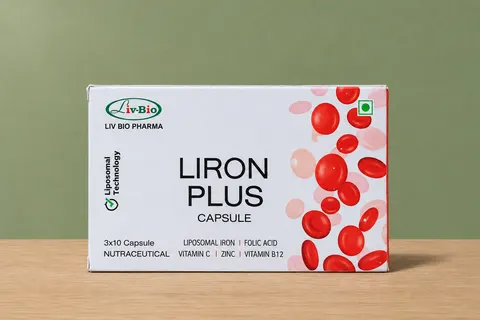
In the clinic's Shop
The clinic stocks these products for people who ask about this concern. They are not a treatment for any disease and do not replace a doctor's advice. Check with a doctor before you start one, especially if you take other medicines, are pregnant or breastfeeding, or have a long-term health condition.
Questions people ask
Why do some people with low iron crave ice?
Wanting to chew ice, or even non-food items such as paper, has a name: pica. It is one of the less common signs of iron deficiency anaemia, and it tends to show up as the anaemia gets worse. It is a useful clue, so mention it to your doctor even if it feels odd to talk about, and ask whether a blood count and ferritin test make sense for you.
Can low hemoglobin cause hair fall?
It can. Noticing more hair coming out when you comb or wash it is one of the less common signs of iron deficiency anaemia. Hair fall has many other possible causes too, so a blood test is a better guide than guessing. If low iron turns out to be the reason, a doctor will also look for why it is low.
Can my iron be low even if my hemoglobin is normal?
Yes. Your body uses up its stored iron first, and anaemia from low iron develops only once those stores run low. So you can be short of iron before it shows on a blood count. That is why doctors often check ferritin, the stored iron, along with the CBC when they suspect low iron. Ask about it if you have signs of low iron but a normal hemoglobin.
Should I start iron tablets on my own if I feel tired?
It is better to test first. Tiredness has many causes, and anaemia from thalassaemia trait or low vitamin B12 will not get better with iron. Do not take iron for thalassaemia trait unless a test also shows low iron. Check with a doctor first if you are pregnant or breastfeeding, have kidney, liver or heart disease, take several regular medicines, or have haemochromatosis (too much stored iron). Keep all iron tablets out of children's reach, as an overdose can be fatal for a young child.
This guide is general information, not medical advice, and it has not yet been reviewed by a doctor. It does not replace a consultation. If you are unwell, worried or unsure, please see a doctor.