Cracked heels and dry skin: causes and home remedies
Short answer
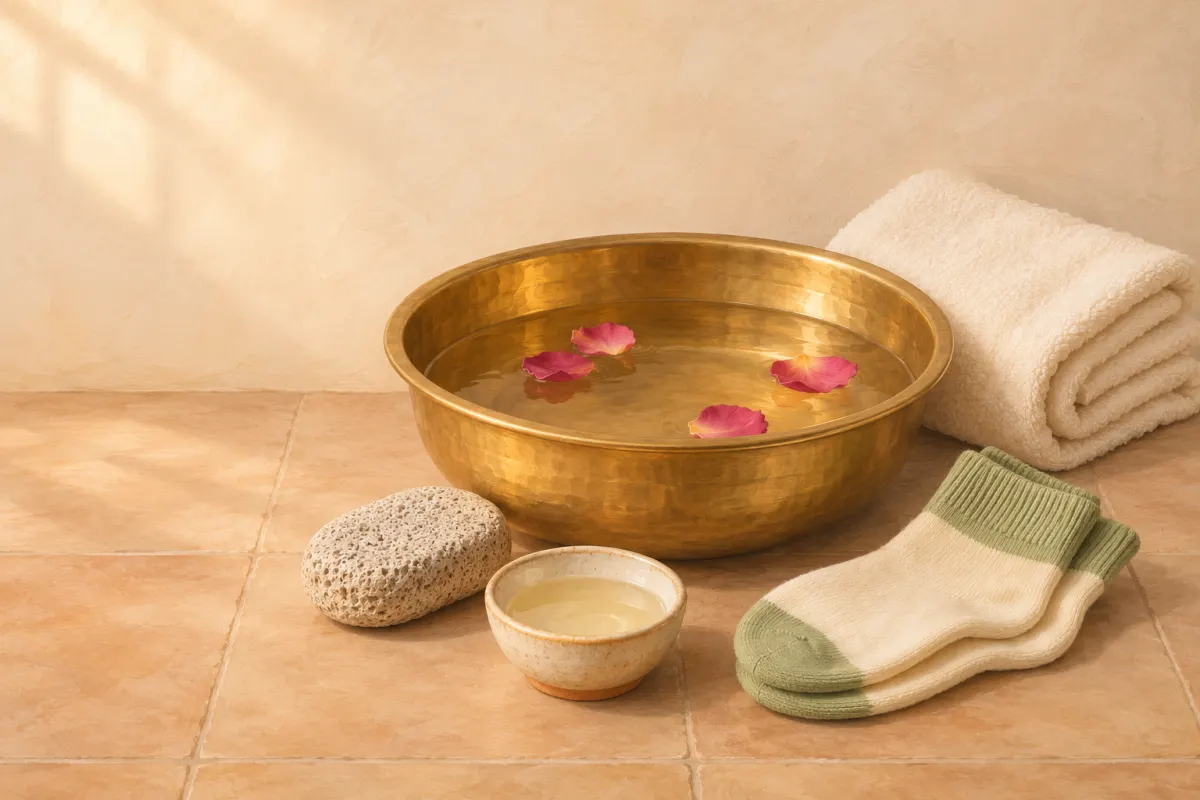
For cracked heels, soak briefly in lukewarm water, rub the thick skin gently with a pumice stone, and moisturise while the skin is still damp. At night, wear cotton socks over petroleum jelly. If your feet are numb or you have poor circulation, skip soaking and the pumice stone and ask your doctor first. See a doctor if a crack is deep, bleeding, red or sore.
What home remedies help cracked heels?
Skin doctors suggest a simple daily routine:
- Wash and soak briefly in lukewarm, not hot, water with a mild, fragrance-free soap. A few minutes is enough; long soaks dry the skin further.
- Rub gently with a pumice stone over the thick skin after soaking. Stop before it feels sore, and skip any skin that is red, broken or itchy.
- Moisturise within a few minutes, while the skin is still damp. Heel creams with urea (a skin-softening ingredient), salicylic acid or alpha hydroxy acids (mild fruit acids) loosen hard skin. Try any new cream on a small patch first, and keep acid creams off open or bleeding cracks.
- Seal it in at night with plain petroleum jelly under thin cotton socks.
- Protect deep cracks during the day with a liquid bandage from the pharmacy, which can ease pain and keep germs out.
If your feet are numb or you have poor circulation or diabetes, do not soak your feet, and ask your doctor before using a pumice stone or salicylic acid creams.
Why are my heels cracking so much?
Most cracked heels start with dry skin. The skin around the rim of the heel turns thick and hard, forming a callus. With every step, the fat pad under your heel is pressed down and spreads sideways, and the dry, hard skin splits.
Common reasons:
- Open-back chappals and sandals, which do not hold the heel pad in place.
- Standing for long hours, especially on hard floors, and extra body weight.
- Age. Older skin makes less oil and gets thinner, so it dries out more easily.
- Dry air, long hot baths and harsh soaps, which strip the skin's natural oils.
Which vitamin are you lacking if your heels crack?
No single vitamin is known to cause cracked heels. In most people, dry skin and pressure are the reason, and a vitamin tablet does not change that. Dry, flaky skin can sometimes come with a shortage of nutrients, among other causes, so regular, balanced meals still matter.
If your heels keep cracking despite good care, or your skin is dry all over, a doctor may:
- look for eczema, psoriasis or a fungal infection, which need their own treatment
- ask about your medicines, as some can dry the skin
- suggest tests, such as blood sugar and thyroid tests
Does coconut oil help cracked heels and dry skin?
Many South Indian homes use coconut oil as a moisturiser. In one small trial, 34 people with dry skin on their legs used virgin coconut oil or mineral oil twice a day for two weeks. Both improved skin moisture to a similar degree, and no one had a skin reaction.
That trial looked at dry legs, not deep heel cracks. Oil softens skin and seals in moisture, but it does not loosen thick, hard skin the way urea or salicylic acid creams can. So coconut oil on damp skin after a bath suits dry legs, arms and mildly rough heels, while thick, cracked heels may also need a heel cream.
Rubbing til (sesame) or coconut oil into the feet at bedtime is a traditional Ayurvedic habit; it has not been tested as a remedy.
Why does my skin get so dry and itchy in winter?
Dry skin happens when the skin loses too much water and oil. Cool, dry winter air and air conditioning draw moisture out of it, and hot water, long or frequent baths and strong soaps make it worse. It can feel tight and itchy, look rough, scaly or red, and show fine cracks, most often on the arms and legs. To ease it:
- bathe in lukewarm water and keep it short
- pat your skin dry instead of rubbing
- use a gentle cleanser without perfume or colour
- moisturise straight after your bath; creams with urea or lactic acid can help very dry skin
If patches stay very itchy, red or inflamed, a doctor may suggest a medicated cream for a short time.
How do I stop cracked heels coming back?
Cracks tend to return when the routine stops, because the pressure on your heels does not. Keep these habits:
- Moisturise your heels every day, not only your face and hands.
- Choose footwear with a closed back that fits well. Replace worn-down pairs, and avoid open-back chappals, flip-flops and slingbacks if your heels crack easily.
- Wear socks when you can, as a layer against dry air and rough floors.
- Look at your heels each night and moisturise more at the first small crack.
- Keep using the pumice stone lightly on thick skin, rather than scrubbing hard now and then.
When do cracked heels need a doctor?
Deep cracks break the skin's barrier and let germs in. An infected crack can spread into the skin around it (cellulitis), which needs a doctor's treatment.
Take extra care if you have diabetes. Over time it can damage the nerves in the feet, so you may not feel a crack or blister, and it can reduce blood flow, so sores are slow to mend. A crack can then turn into a foot ulcer. If you have diabetes:
- check your feet every evening, including between the toes, using a mirror or someone's help
- wash in warm, not hot, water, test it with your elbow, and do not soak your feet
- do not cut corns or calluses yourself or use corn plasters or liquid corn removers
- ask for a foot check at every visit
In the clinic's Shop
The clinic stocks these products for people who ask about this concern. They are not a treatment for any disease and do not replace a doctor's advice. Check with a doctor before you start one, especially if you take other medicines, are pregnant or breastfeeding, or have a long-term health condition.

Questions people ask
Is petroleum jelly good for cracked heels?
Yes, it is one of the simplest options. Plain petroleum jelly seals the skin and holds in moisture from your bath or cream, so put it on at bedtime under thin cotton socks. It does not loosen hard skin by itself, so pair it with gentle pumice use or a heel cream if the skin is thick.
Should I cut or scrape off the hard skin on my heels?
No. Cutting hard skin with a blade, scissors or a nail cutter can take off too much and let infection in. Use a pumice stone gently instead, only on skin that is not red or sore. A podiatrist (foot doctor) can safely remove very thick skin. People with diabetes should not cut corns or calluses at all.
Why are my heels cracking and bleeding?
Heels bleed when a crack goes deep, most often in thick, very dry skin under a lot of pressure. Keep it clean and covered, and skip the pumice stone and acid creams until it closes. Deep cracks can let germs in, so book a doctor's appointment, and get help the same day if the skin around it turns red, warm or more painful.
How long do cracked heels take to get better?
For mild cracks, moisturising two or three times a day may be enough. Heel creams that remove dead skin, such as urea creams, usually take about two weeks of regular use to show a clear difference. If there is no improvement after a week, or the cracks are deep and painful, see a podiatrist or doctor.
This guide is general information, not medical advice, and it has not yet been reviewed by a doctor. It does not replace a consultation. If you are unwell, worried or unsure, please see a doctor.
Sources
- How to care for dry, cracked heels - American Academy of Dermatology
- Cracked Heels? Here's How To Heal Your Feet - Cleveland Clinic
- Cracked heel - DermNet
- Dry skin: MedlinePlus Medical Encyclopedia
- Diabetes & Foot Problems - NIDDK
- A randomized double-blind controlled trial comparing extra virgin coconut oil with mineral oil as a moisturizer for mild to moderate xerosis - Dermatitis (2004)