Hair fall in women: common reasons and what helps
Short answer
Most hair fall in women comes from a recent strain on the body, low iron, an inherited pattern of thinning or harsh hair care. The strain can be an illness, childbirth, a crash diet or a stressful few months. See a doctor if your hair falls suddenly, in patches, or with other symptoms.
Why does hair fall happen in women?
The usual reasons are:
- A recent strain on the body. A high fever, a bad infection, childbirth, an operation, a crash diet or a very stressful time can push many hairs into their resting stage at once. They fall out weeks to months later.
- Too little iron or protein. Running short of iron, protein, zinc or biotin can show up as hair fall.
- An inherited pattern, seen as slow, all-over thinning or a widening parting.
- Hair care. Colouring, perming, relaxing and tight hairstyles can damage hair over time.
- Hormones and medicines. Thyroid problems, polycystic ovary syndrome (PCOS), stopping birth control pills and some medicines can thin the hair. These need a doctor's check. Do not stop a prescribed medicine on your own.
How much hair fall a day is normal?
Some hair fall every day is normal. Your scalp has about 100,000 hairs, and losing up to about 200 a day can still be normal.
A change matters more than a number. Signs you are losing more than usual:
- hair coming out in handfuls when you wash or comb it
- a wider parting, or more scalp showing on top
- a plait or ponytail that feels thinner
- round bald patches, or hair loss from your eyebrows or eyelashes
Bald patches, or hair fall with an itchy, red or sore scalp, point to other causes and need a doctor's look.
Can stress or low iron cause hair fall?
Yes, both can. A shock to the body or mind can make many hairs shed at once a few months later. Triggers include a fever, a new baby or a hard time at home or work. The shedding usually eases within six to eight months, and the related guide on hair fall after fever explains why.
Low iron is the world's most common nutritional shortfall and is often found in women with hair loss. In women, heavy periods are a common reason for low iron, so tell your doctor if your periods are heavy. A blood test for ferritin, the iron your body keeps in store, shows your level. Vitamin C in the same meal helps your body take up iron from food.
Why is my hair thinning after 40?
Some thinning with age is normal. Hair grows back more slowly, some follicles (the tiny pockets hairs grow from) go quiet, and the hairline tends to creep back slightly.
The most common cause of thinning is inherited. In women, the first sign is usually all-over thinning or a parting that slowly widens. It tends to continue unless treated, and treatment works best when started early, so see a doctor rather than wait. A doctor may suggest a medicine applied to the scalp, such as minoxidil.
Hormone changes around menopause can also thin the hair, and this often settles within six months to two years. Between the ages of 30 and 60, some women also see the whole scalp thin for no clear reason. The loss is often worst at the start, then eases or stops.
Dry scalp or dandruff: which one do I have?
Both cause an itchy, flaky scalp, but the cause differs:
- Dandruff comes from too much oil. Skin cells build up and come off as larger flakes, and the scalp can look red, oily and scaly. A yeast on the skin plays a part, and stress and cold weather can make it worse. It is not caused by poor hygiene.
- A dry scalp has lost too much moisture, often from harsh hair products, the weather or age. Your skin elsewhere often feels dry too.
For dandruff, try a pharmacy anti-dandruff shampoo with ketoconazole, coal tar or salicylic acid for up to four weeks. A dry scalp often settles with a gentle, non-medicated shampoo. See a doctor if it does not improve, or if your scalp is red, swollen or very itchy. A scaly rash with patches of hair loss can be a fungal infection (ringworm) and needs a doctor too.
Home remedies for hair fall: does oil help?
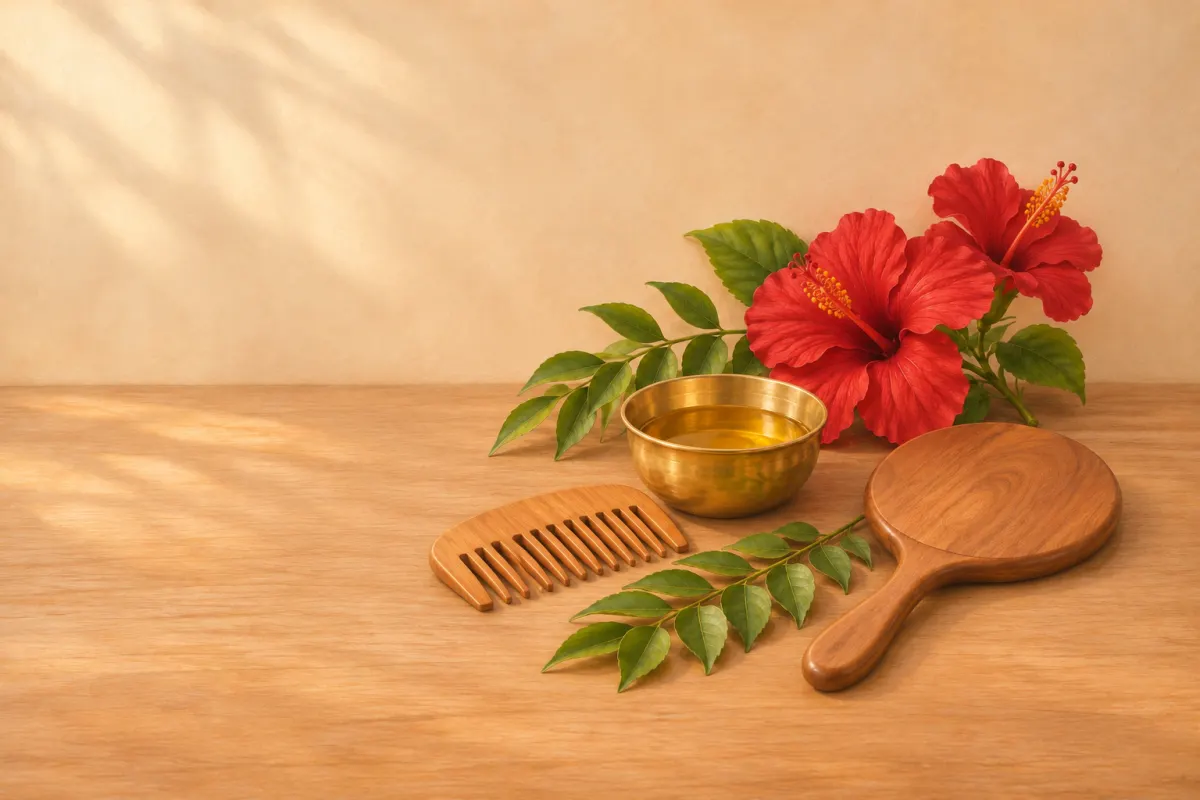
Oiling is a long tradition in Indian homes, and it can help the hair you can see. Oil coats the hair shaft, so hair breaks less when combed. In one study, coconut oil reduced the protein hair loses in washing, while sunflower and mineral oil did not.
But oil works on the length of the hair, not the root, so it cannot correct low iron, stress shedding or an inherited pattern. With dandruff, heavy oiling is unlikely to help the flakes, so wash oil out well. Try any new oil on a small patch of skin first, and stop if it itches or turns red.
Other habits that help:
- Eat enough protein at regular meals: dal, chana, rajma, curd, paneer, eggs or fish. Avoid crash diets.
- Be gentle. Daily tight plaits, buns and ponytails can cause lasting hair loss.
- Do not stack supplements. Too much vitamin A or selenium can cause hair loss.
What will a doctor check for hair fall?
A doctor will ask about recent illness, childbirth, stress, diet, medicines, hair care and family history, and look closely at your hair and scalp, which is often enough. Take a list of your medicines and supplements.
Tests are not always needed. If they are, a doctor may suggest:
- a blood count for anaemia (too few healthy red blood cells), and ferritin for iron stores
- thyroid or hormone tests, if your symptoms point that way
- vitamin D, as low levels have been linked with some kinds of hair loss
- a plucked hair under a microscope, or rarely a small skin sample from the scalp
If you take a supplement with biotin, tell the doctor and the lab before any blood test. High amounts can make many results falsely high or low.
In the clinic's Shop
The clinic stocks these products for people who ask about this concern. They are not a treatment for any disease and do not replace a doctor's advice. Check with a doctor before you start one, especially if you take other medicines, are pregnant or breastfeeding, or have a long-term health condition.


Questions people ask
Which vitamin is good for hair fall in women?
No single vitamin suits everyone. Supplements tend to help only when a blood test shows a shortfall, such as low iron. The related guide on hair fall tablets covers which tests to do first. If you are pregnant or breastfeeding, take thyroid tablets or several medicines, are older, or have kidney, liver or heart disease, ask a doctor first. Keep supplements out of children's reach.
Is hair fall after delivery normal?
Yes. Many women see much more hair in the comb a few months after giving birth. It is stress-type shedding and usually stops by itself. Once it stops, most women's hair looks full again within about six to nine months, though for some it takes up to two years. If you are breastfeeding, check with a doctor before taking any supplement.
Why is my hair falling so much all of a sudden?
It is most often a delayed reaction to something weeks or months earlier, such as a fever, an operation or a stressful event. A new medicine can do it too: ask the doctor who prescribed it rather than stopping it. Round bald patches that appear quickly are different and need a doctor's check.
How can I control hair fall?
Start with the cause, because what helps depends on it. Shedding after illness, childbirth or stress usually settles by itself. Low iron needs a blood test and a doctor's advice. Inherited thinning responds best to early treatment. Day to day, eat enough protein, avoid crash diets and be gentle with your hair. Hair lost to years of tight hairstyles or to scalp scarring may not come back.
This guide is general information, not medical advice, and it has not yet been reviewed by a doctor. It does not replace a consultation. If you are unwell, worried or unsure, please see a doctor.
Sources
- Hair loss: MedlinePlus Medical Encyclopedia
- Hair loss: Who gets and causes - American Academy of Dermatology
- The Role of Vitamins and Minerals in Hair Loss: A Review - Dermatology and Therapy (2018)
- Hair Cosmetics: An Overview - International Journal of Trichology (2015)
- Dry Scalp: Causes, Treatment & Prevention - Cleveland Clinic
- Dandruff - NHS
- Iron deficiency anaemia - NHS
- Hair dye reactions - NHS